

The Animals That Became Symbols of Cartier
When most people think of Cartier animals, they think of the panther. Fair. She is the main character. But Cartier’s real animal kingdom is much stranger, richer and more glamorous than one famous feline. Across more than a century, the Maison has turned tigers, owls, flamingos, scarabs, snakes, crocodiles, elephants, zebras and giraffes into objects of desire. Some appeared as high jewellery masterpieces. Others arrived as evening bags, spectacles, watches or one-off commissions for women with extraordinary taste and, evidently, very little interest in blending in. This is Cartier at its best: audacious, precise, symbolic and just theatrical enough. A house where a crocodile can become a necklace, a flamingo can become a brooch, and an owl can turn a gold mesh bag into something worth talking about a century later.
La Panthère, 1914
Before Cartier’s menagerie became fully populated, there was the panther. The animal first entered Cartier’s visual universe in 1914, when its spotted motif appeared on a watch. That same year, Louis Cartier commissioned illustrator George Barbier to create La Dame à la Panthère, an image that helped set the tone for one of jewellery’s most enduring relationships: Cartier and the big cat. The panther, however, did not become a house symbol by accident. Jeanne Toussaint, Cartier’s visionary creative director and the woman nicknamed “La Panthère”, understood the animal’s power. It was elegant, dangerous, independent and entirely unsentimental. In other words, the perfect Cartier creature. By the late 1940s, the panther had taken on sculptural form. The Duchess of Windsor became one of its most famous patrons, wearing extraordinary Cartier panther jewels including the 1948 panther brooch and the 1949 sapphire panther clip brooch, which helped cement the animal’s status as the Maison’s signature. The panther was not just decoration. It was attitude, distilled in diamonds, onyx and emerald eyes.

The Tiger, circa 1950s
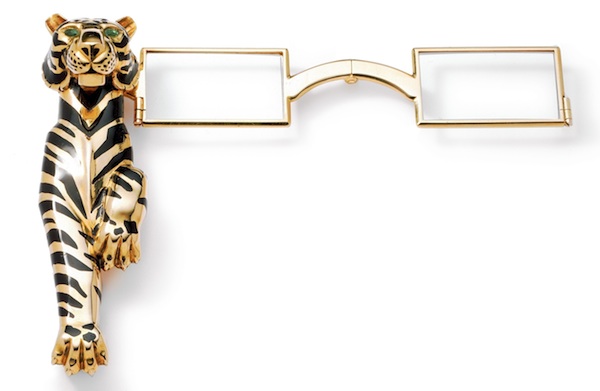
The tiger’s place in Cartier history is slightly more niche, which naturally makes it all the more interesting. One of its most memorable early appearances came in the form of a tiger lorgnette, specially commissioned from Cartier Paris in 1954 for the Duchess of Windsor. Made in gold, enamel and emeralds, it was less an accessory than a social weapon. A lorgnette is technically designed to help you see. This one was clearly designed to help you be seen. Imagine lifting a tiger-handled pair of spectacles at the theatre. Functional? Yes. Subtle? Absolutely not. The piece captures exactly what Cartier does so well: taking an everyday object and giving it personality, wit and just enough danger.
The Owl, circa 1906
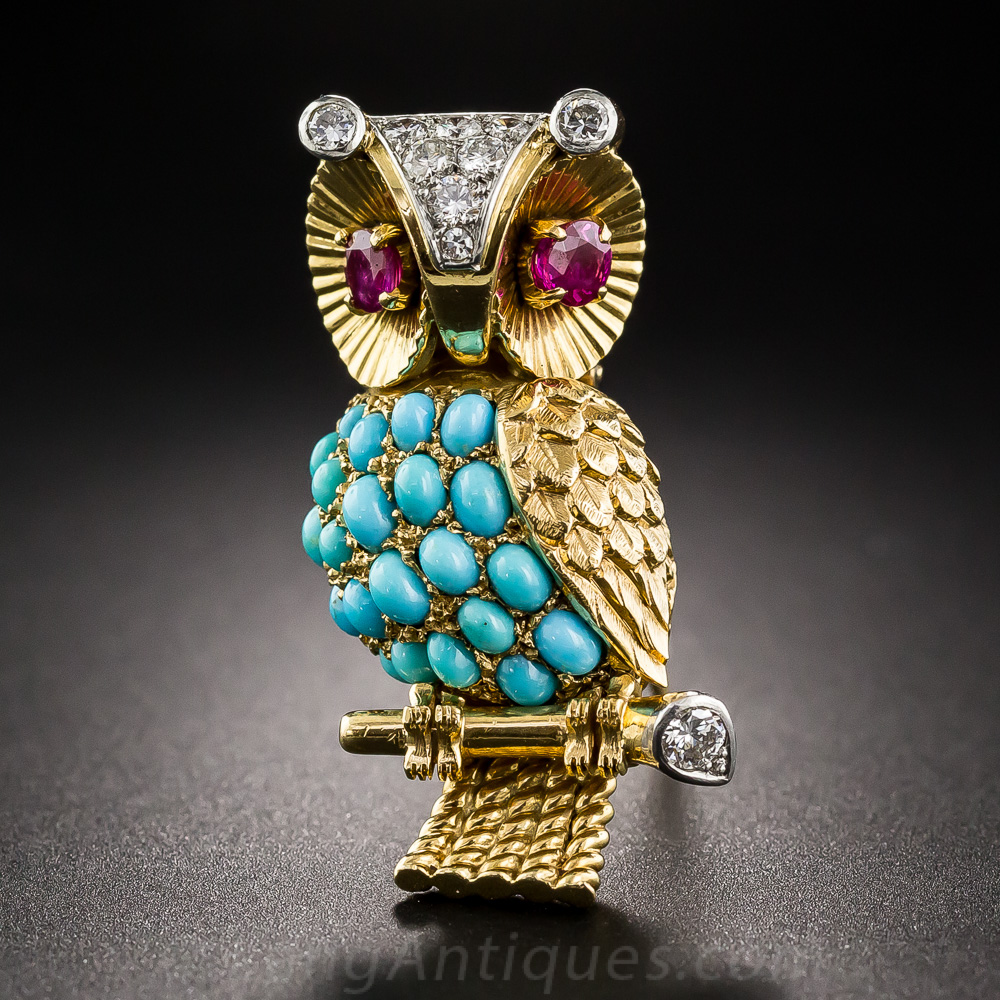
Cartier’s animal world has never been limited to jewellery and watches. The Maison’s early accessories were often just as imaginative, including one of its most charming creations: the owl evening bag. Cartier’s first jewellery bag appeared in 1906, a gold mesh design known as the hibou, French for owl, because of its owl-shaped clasp with emerald eyes. The result was part handbag, part jewel, part tiny nocturnal guardian. It is a reminder that Cartier’s animals did not always need claws, fangs or diamonds the size of sugar cubes to make an impact. Sometimes, all it took was a gold mesh pouch and a clasp with a very knowing stare.
The Flamingo, circa 1940
If the panther was Cartier’s sleek predator, the flamingo was its eccentric showgirl. Commissioned for the Duchess of Windsor in 1940, Cartier’s famous flamingo brooch remains one of the Maison’s most distinctive bird designs. Its body and legs were pavé-set with diamonds, while its plumage came alive in rubies, sapphires and emeralds. The pose was classic flamingo: one leg bent, neck curved, entirely aware of its own silhouette. It was glamorous, yes, but also slightly strange in the best way. The flamingo is not an obvious jewellery animal. It does not roar, prowl or strike. It balances. It poses. It turns awkwardness into elegance. Very Cartier, actually.

The Scarab, circa 1924
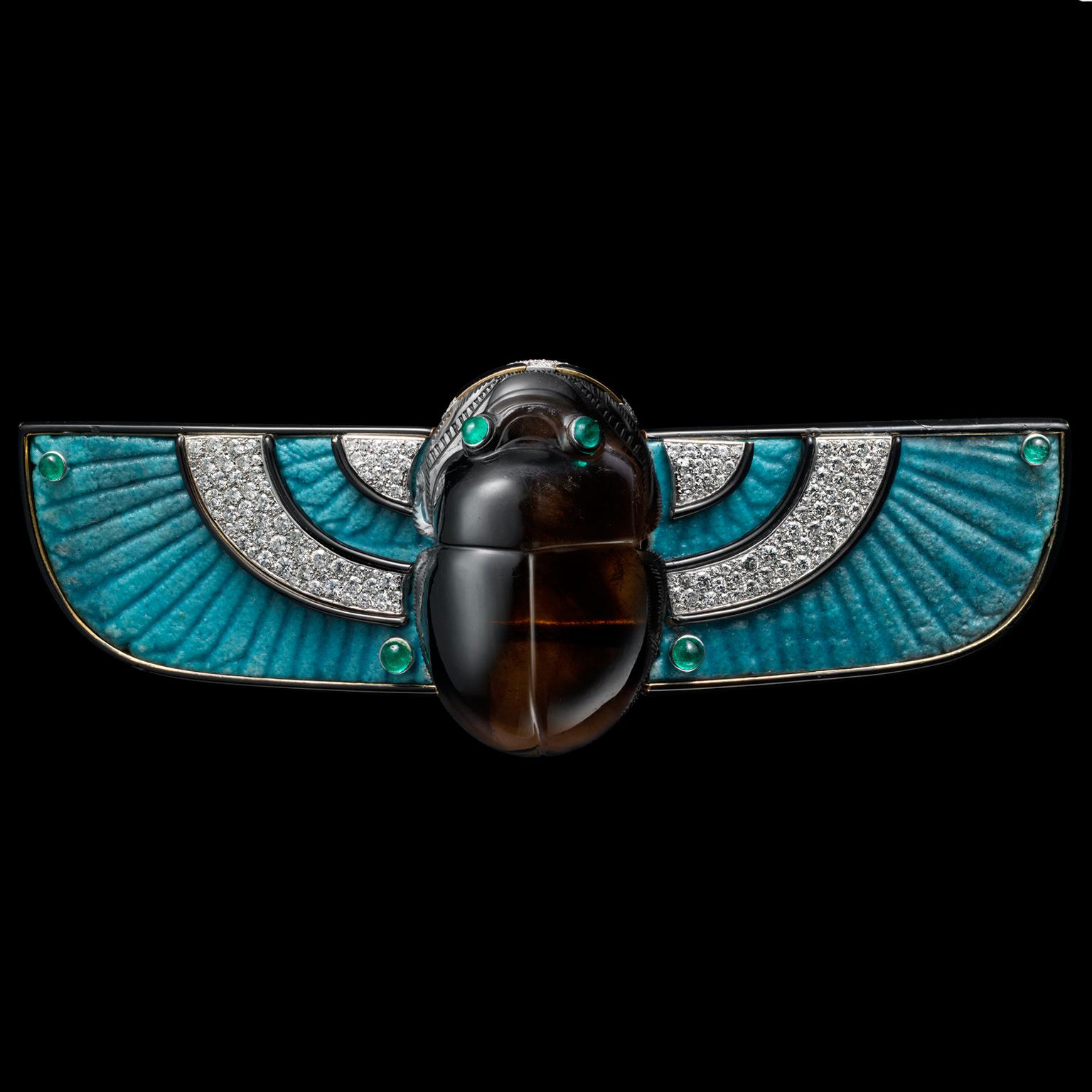
Long before “archive-inspired” became a phrase everyone overused, Cartier was already looking deep into history. The 1924 Cartier scarab brooch is one of the Maison’s most fascinating animal-inspired creations. Made by Cartier London, it combined gold, platinum, diamonds, emeralds, smoky quartz, enamel and Ancient Egyptian faience. Most remarkably, the wings dated from the second half of the first millennium BCE and came from Cartier’s stock of apprêts, the Maison’s collection of fragments from disassembled jewellery and objects. It was not simply a brooch shaped like an insect. It was a miniature collision of antiquity, Egyptomania and Art Deco design. The scarab had long been associated with rebirth and transformation, making it a particularly fitting symbol for Cartier, a house that has always known how to turn history into something startlingly modern.
The Snake, circa 1968
Cartier’s snake belongs to another kind of woman entirely. In 1968, Mexican actress María Félix commissioned Cartier to create a snake necklace, and the Maison responded with one of the most technically extraordinary animal jewels in its history. Measuring 57 centimetres, the necklace was fully articulated and set with 2,473 diamonds, designed to wrap around the neck with the movement and tension of a living reptile. It was not delicate. It was not polite. It was spectacular. Later, Cartier’s snake mythology continued to evolve, including the emerald and diamond snake necklace worn by Naomi Campbell at a Cartier dinner in 1998. Where the panther seduces with stealth, the snake does something more direct. It hypnotises.

The Crocodile, circa 1975
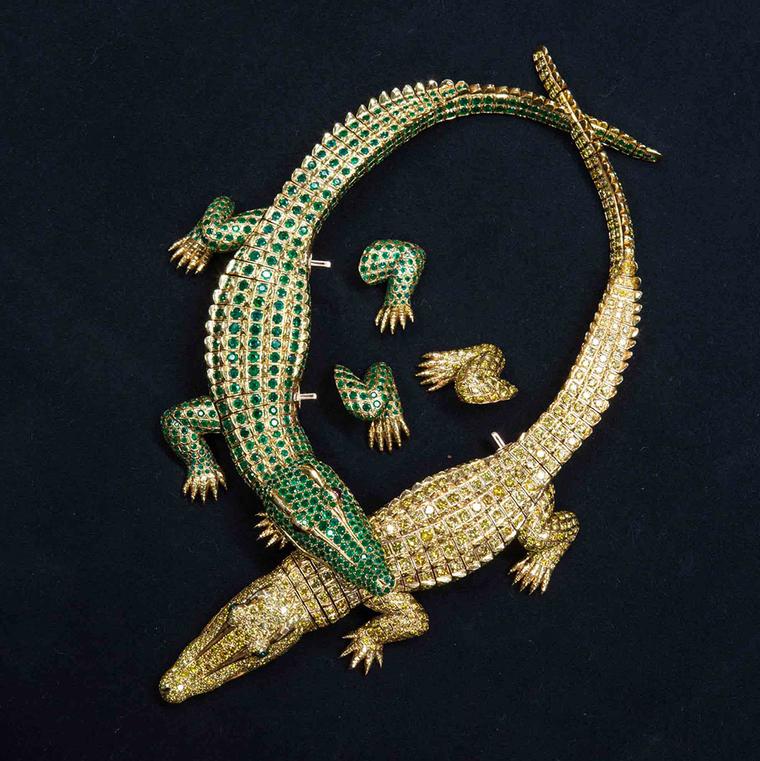
If anyone was going to ask Cartier for crocodiles, it was María Félix. In 1975, the actress commissioned Cartier Paris to create the legendary Crocodile Necklace, composed of two intertwined crocodiles in gold, fancy intense yellow diamonds, emeralds and rubies. The design was entirely articulated, and the two crocodiles could also be worn separately as brooches. The result is pure Cartier theatre: technically brilliant, slightly outrageous and completely unforgettable. The piece sits somewhere between jewellery and creature, which is exactly the point. On the body, it does not simply decorate. It occupies space.
The Elephant, circa late 20th century
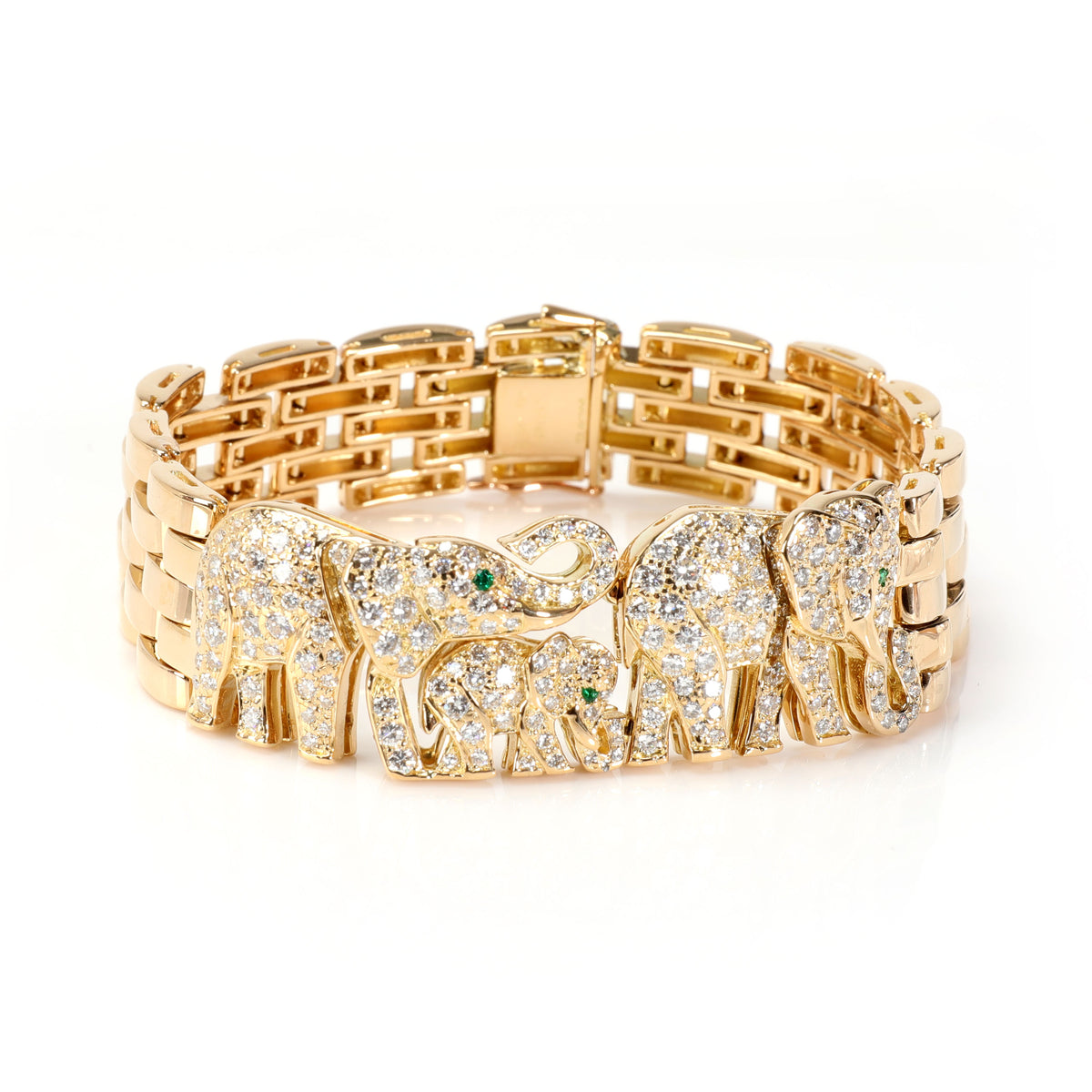
Cartier’s elephants reveal a softer side of the Maison’s animal kingdom.
Where the panther prowls and the crocodile coils, the elephant often appears with charm and warmth. Later 20th-century Cartier elephant pieces include pendants and brooches, with one particularly sweet example being the “Elephant Family” brooch from the 1990s.
In that piece, a line of elephants appears linked together by tails and trunks. It is playful, sculptural and far gentler than Cartier’s more predatory animals, but no less collectible. The magic is in the balance: sentimental, but still refined.
The Zebra and the Giraffe
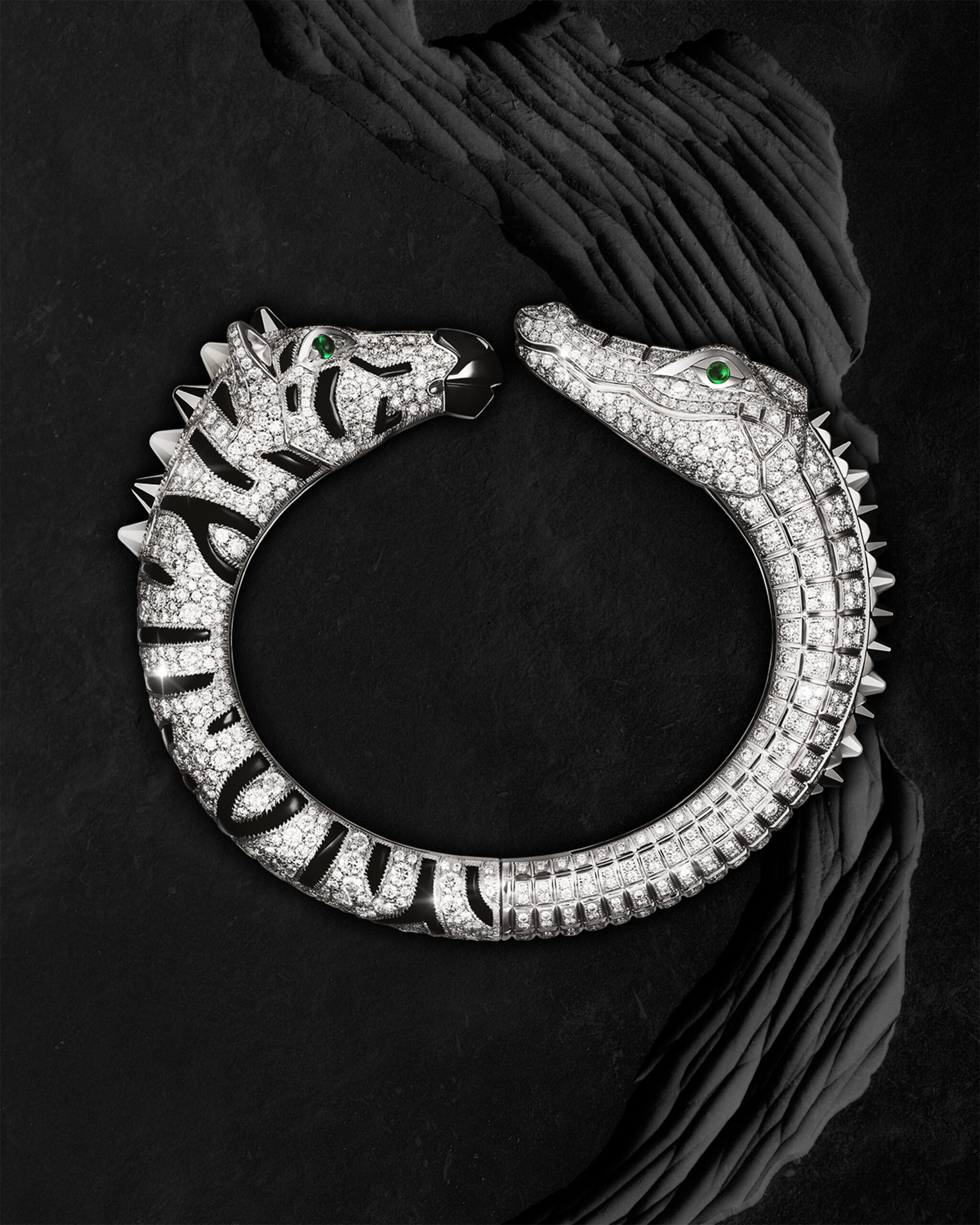
Cartier has always understood the power of pattern. So, of course, the zebra and giraffe eventually found their place. In the Maison’s later high jewellery universe, and especially through the Indomptables de Cartier collection, zebra and giraffe motifs appear alongside tigers and panthers in rings, watches and bracelets. The animals play with each other’s identities, swapping patterns, intersecting heads and creating surreal combinations. This is not nature copied literally. It is nature reimagined through Cartier’s eye: graphic, playful, technically exact and a little bit mischievous. The zebra brings stripes. The giraffe brings spots. Cartier brings the audacity.
Penguins, Monkeys, Foxes, Turtles and Dolphins
The best thing about Cartier’s animal kingdom is that it does not stop at the obvious creatures. Beyond the grand historical commissions, Cartier has created and inspired a wider world of animal jewels: penguins, monkeys, foxes, turtles, dolphins, insects, birds and more. Some are precious, some are playful, some are almost cartoonish in spirit, but all show the Maison’s ability to turn personality into form. Aldo Cipullo, best known for the Cartier Love bracelet and Juste un Clou, also appears in this more playful chapter of Cartier design. Collector-market examples include animal brooches attributed to Cipullo for Cartier, such as penguin and monkey designs, both far removed from the clean industrial language he is most famous for. That range is the point. Cartier’s animals can be sleek, regal, witty, ancient, glamorous or absurdly charming. The Maison does not treat nature as one mood. It treats it as a full cast.

Why Cartier’s Animals Still Matter
Cartier animal jewellery is collectible because it sits at the intersection of design, craft and personality. A Love bracelet may be instantly recognisable. A Tank watch may be the definition of restraint. But a Cartier animal jewel often says something more specific about its wearer. A panther suggests power. A snake suggests drama. A flamingo suggests wit. A crocodile suggests you are not here to be sensible. For vintage jewellery collectors, that is exactly the appeal. These pieces are not just valuable because they are Cartier. They are valuable because they tell stories: of famous patrons, extraordinary commissions, technical innovation and design that refuses to behave. In the pre-owned jewellery world, provenance, rarity and condition matter. But so does feeling. Cartier’s animals have it in abundance.
They remind us that luxury is not always about quiet good taste. Sometimes, it is about lifting a tiger lorgnette at the theatre, wearing a diamond snake around your neck, or pinning a flamingo to your lapel because subtlety simply wasn’t on the moodboard. For collectors, vintage lovers and anyone drawn to jewellery with a story, Cartier’s animal kingdom remains one of the most fascinating chapters in luxury design. Explore Rewind Vintage Affairs’ curated edit of authenticated pre-owned Cartier jewellery, vintage jewellery and rare designer pieces.


